Calocurb.
Conversion research, redesign and A/B testing programme for the world’s first natural GLP-1 activator. NZ-founded, US-led growth.
- Client
- Calocurb. Plant-based satiety supplement built on the patented Amarasate® hops extract from Plant & Food Research.
- Industry
- DTC eCommerce supplements. Premium positioning ($89/30-day) in the GLP-1 adjacent category.
- Markets
- United States (primary), New Zealand, United Kingdom. Three commerce surfaces: calocurb.com, calocurb.co.nz, wholesale.calocurb.
- Engagement
- Conversion research (Dec 2024), homepage and PDP redesign (Q1 2025), Round 1 A/B test (April 2025), iterative recommendations and ongoing programme through 2025.
- Stack
- Shopify, Shoplift A/B platform, GA4, Hotjar, Google Tag Manager.
- Partnership
- Delivered in partnership with Stitch Tech on data infrastructure and martech integration.

Lift on the product page conversion rate.
Peak relative lift on the new PDP design vs control during the Round 1 test, before a viral US podcast spike contaminated the sample. Statistically significant signal at every checkpoint up to that moment.
A premium product. A homepage that didn’t convert it.
Calocurb sells a clinically validated, $89-a-month natural GLP-1 supplement in a category dominated by Ozempic and Wegovy. The product is excellent. The website was leaking.
When we walked in, conversion rate on the homepage and product page was sitting well below the benchmark for the category. The analytics setup also needed restructuring before the funnel could tell the truth about where users were dropping off.
- Value proposition clarity. 5-second tests showed first-time visitors struggled to articulate the product category quickly. The category was unfamiliar and the page was not orienting them fast enough.
- Funnel visibility. The drop-off between view product and add-to-cart on US mobile was high and not yet visible in reporting because of the analytics gaps.
- Premium positioning, premium proof. The above-the-fold experience needed to do more work to surface the clinical credibility, ratings and endorsements that were already part of the brand.
Where the data had to be cleaned first.
Before any design work, the analytics had to tell a clean story. Eight foundational fixes shipped before the first variant went live.
Reporting identity
Switched blended → device-based
Attribution model
Data-driven → last click
Session timeout
Adjusted to 7.5 hours
Scroll tracking
Removed default, rebuilt in GTM
Form tracking
Custom GTM events vs auto-tracking
Query parameters
1,816 sessions de-cardinalised
Add-to-cart event
Replaced with select-quantity
Event naming
Normalised to GA4 conventions
Drag the slider. Old site on the left, new on the right.
Two surfaces redesigned through structured research: 5-second tests, copy iterations, and heuristic mapping against the eight conversion barriers.
Homepage redesign
The original homepage tested badly on first impression. Users could not articulate what the product was, even after seven seconds of exposure. The redesign reframed the value proposition around the product image in context, restructured the hero around clinical proof points (30%, 40%, 18% trial result tiles), and pushed testimonials, FAQs and trust seals into the first two screens.
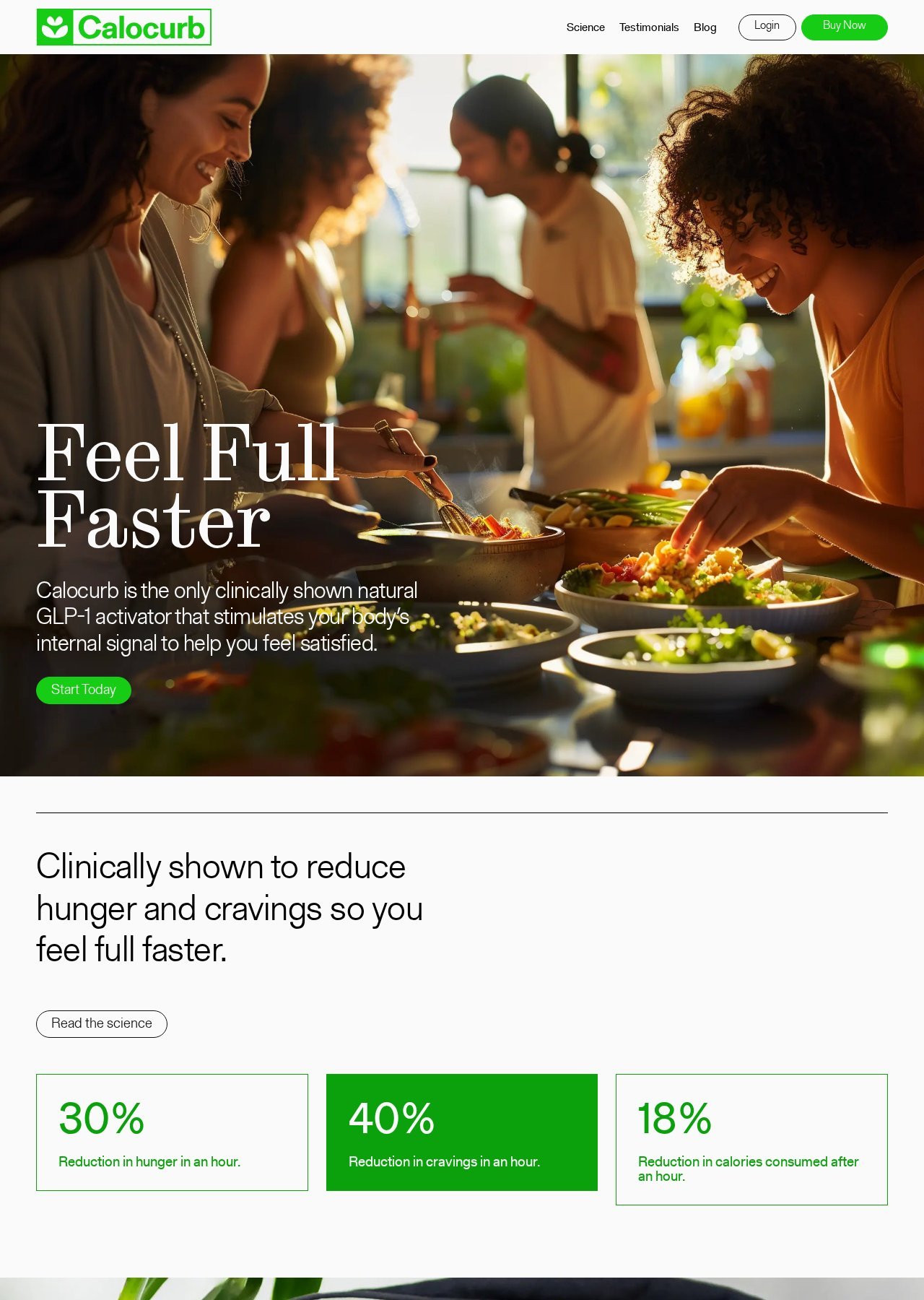
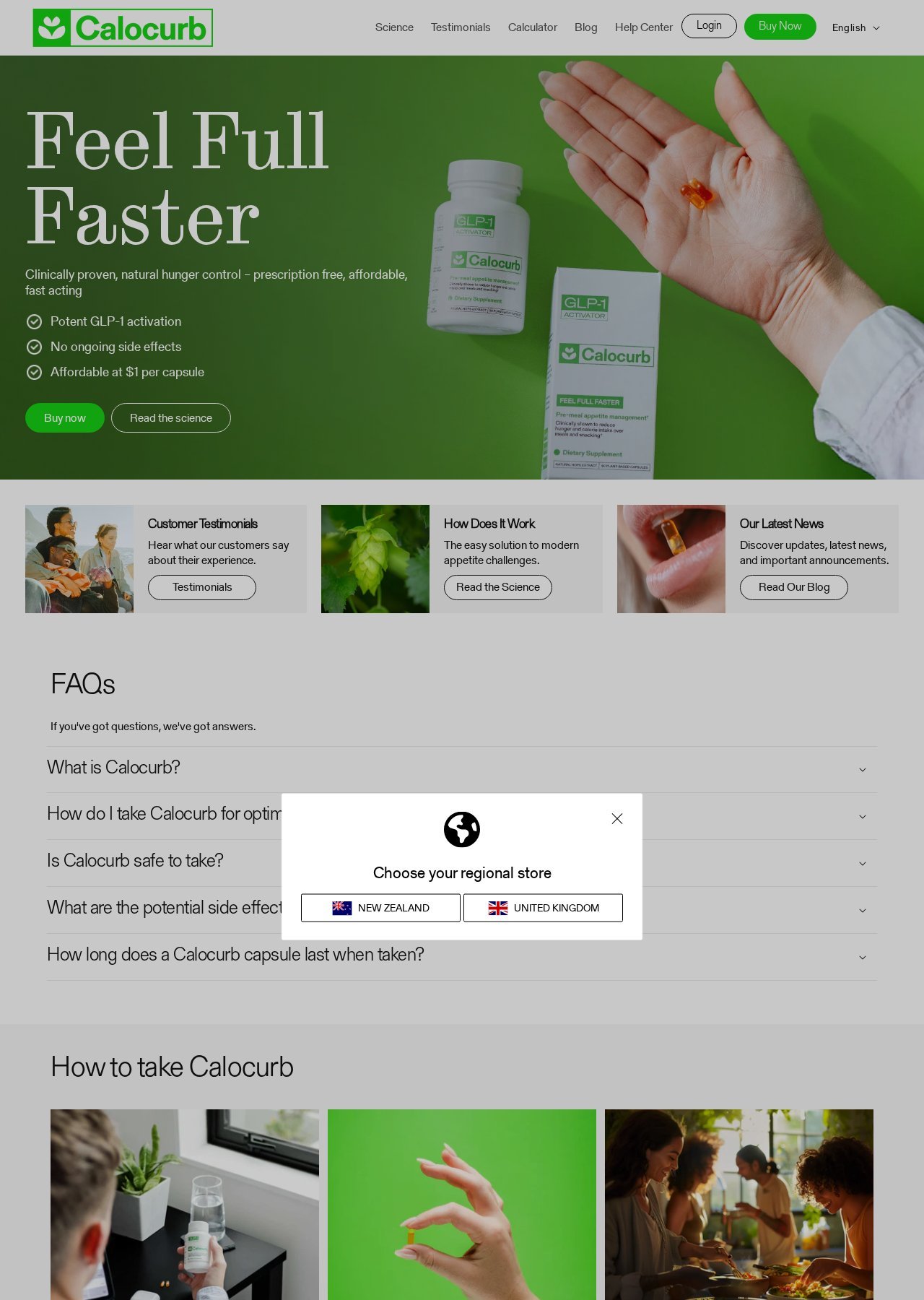
Drag the handle to reveal the redesigned hero, value-prop tiles and trust strip.
Product page redesign
The PDP was the highest-leverage page in the funnel. Trust signals were redesigned and elevated above the fold (NUTRA Ingredients USA award, regional store selector, aggregated review score). The CTA was given more visual weight with surrounding distractions reduced. Featured testimonial moved above the fold with star rating, supplement facts collapsed into an accordion, and the bundle offer surfaced earlier in the mobile flow.
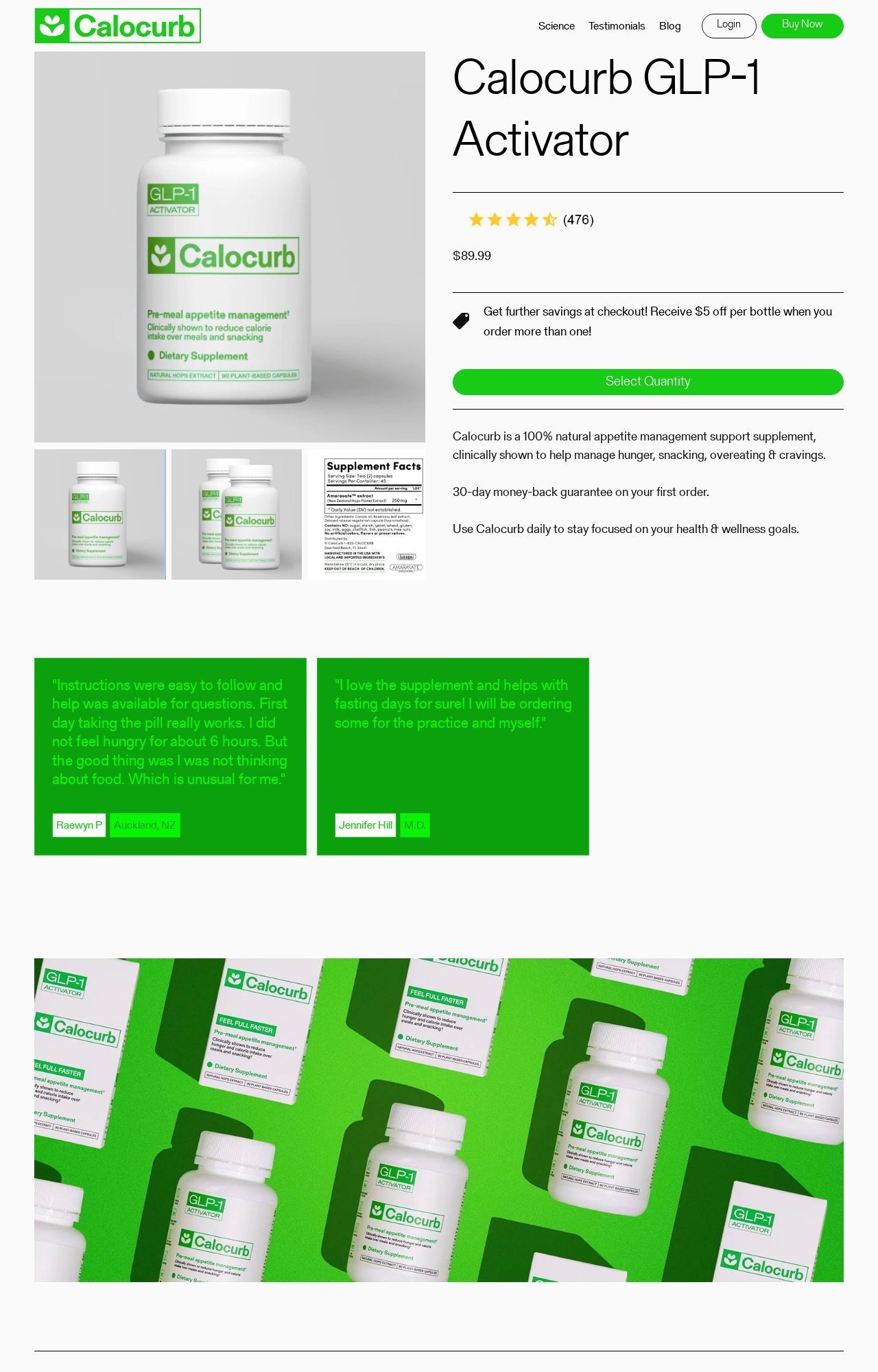
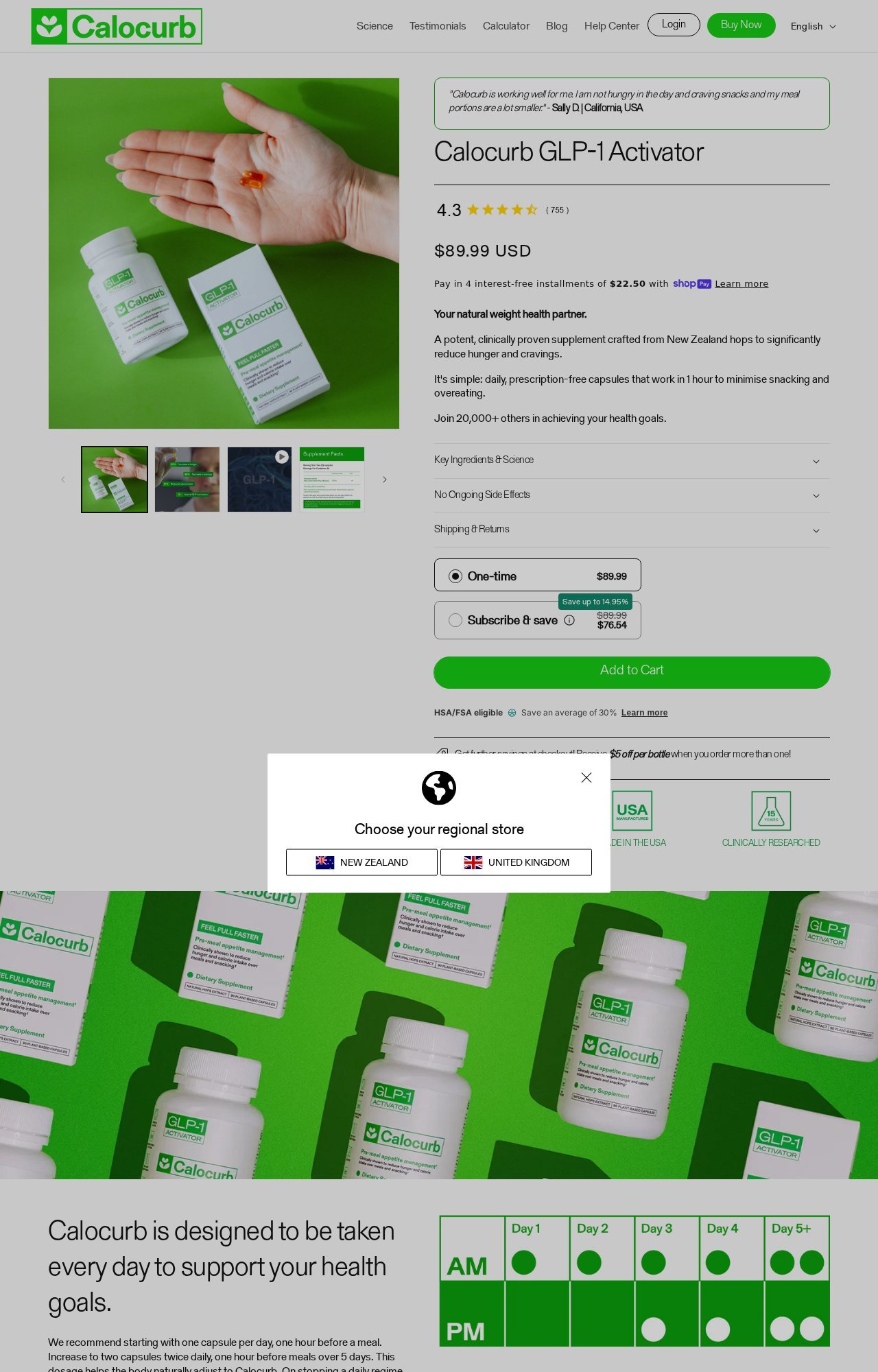
Drag the handle. NUTRA award badge, regional store selector and aggregated rating moved above the fold.
Run the experiment, read the noise.
Round 1 launched April 2025 on Shoplift, with traffic split 50/50 between the original (A) and the redesign (B). The story did not end where the headline stat does.
The peak signal
For the first 9 days of the test, the new product page was running at +40% relative lift in conversion rate over the control. Every checkpoint pointed the same way. The redesign was working.
A separate signal sat beneath that headline number: the funnel itself was healthier. Abandon rates from view product to purchase had collapsed.
Then the contamination
In late April a viral US podcast feature about Calocurb went live. Overnight, the test sample composition shifted, with a large new audience entering both variants with a different intent and behaviour profile. Measured lift moved from +40% to +16% within hours.
We flagged it the same morning, isolated the contaminating segment, and worked with the team to recommend ring-fencing the campaign for the next round. Reading signal vs noise is half the job.